What Is ROI in Real Estate? Calculations, Tips & Strategy
What is ROI in real estate? Learn the key formulas for rentals and flips, what a “good” ROI looks like, and tactics to boost returns.
Written by: Chad Evans
Date of publication: 23.12.2025
Table of Contents
ROI (Return on Investment) in real estate measures a property’s profitability by dividing net profit (income minus expenses) by total investment costs, including the purchase price, repairs, and transaction fees.
Expressed as a percentage, it helps investors compare potential returns and assess risk. While targets vary by market, investors often aim for a return of 10% or higher.
An ROI metric provides a standardized financial indicator for comparing the gain or loss of an investment against its cost. But what does ROI mean in real estate? Simply put, it’s a scorecard measuring the profit from your investment against every dollar you put in.
Understanding how to calculate ROI in real estate is non-negotiable, especially now. With flipping profits sliding to a 23.1% margin in Q3 2025, smart calculations and prudent strategy aren’t just helpful; they’re essential for staying ahead. To ensure your margins remain healthy, it is also vital to understand how the IRS views these projects, particularly regarding house flips and self-employment tax.
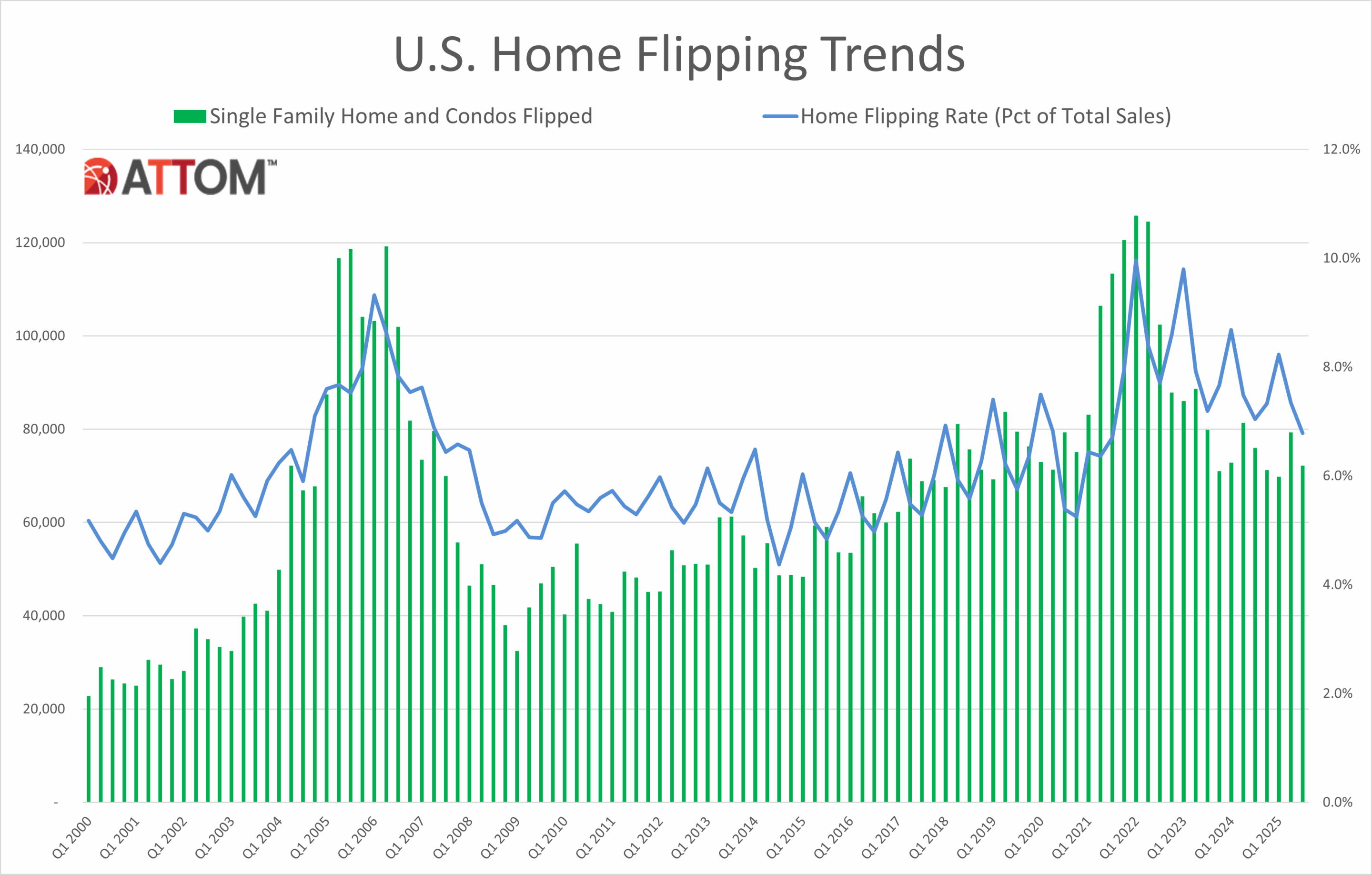
Q3 2025 U.S. Home Flipping Historical Trends (Source: ATTOM)
Key Takeaways
- ROI in real estate is your bottom-line scorecard: profit earned vs. every dollar invested (purchase, repairs, taxes, insurance, and more).
- The “right” ROI calculation depends on the strategy: rentals focus on annual net cash flow, while fix-and-flips focus on net profit at sale.
- ROI is not the same as cash flow, cap rate, or appreciation—those are partial views; ROI bundles costs + returns into one overall performance metric.
- A “good” ROI is contextual, but many investors use benchmarks like outperforming safer alternatives (often cited around ~10% long-term for the S&P 500).
- Typical ROI targets vary by property type: residential rentals often aim higher than commercial stability plays; short-term rentals may offer more upside with more volatility.
- ROI is heavily influenced by fundamentals: location, property type, financing terms, and ongoing expense management can make or break returns.
- Common ROI killers include ignoring holding/maintenance costs, overestimating appreciation, and failing to account for financing impact (rates, fees, payments).
Understanding ROI in Real Estate
An ROI is the clear, bottom-line number that tells you if a property was a smart move or a lesson learned. In a market that is increasingly becoming competitive, comprehending this metric is what separates strategic investors from hopeful speculators. Bridge Text: Professional guidance can help bridge this gap; you can learn more about specialized real estate accounting and advisory services here.
What does ROI stand for in real estate?
In simple terms, ROI stands for Return on Investment. It’s the percentage that answers one critical question: after all your costs, including purchase, repairs, property taxes (Tax Foundation – Property Taxes by State), and insurance, how much real profit did you make on the capital you risked? It matters because it tells investors whether a deal builds long-term wealth or quietly erodes capital.
ROI vs. other investment metrics
Don’t confuse ROI with other key metrics. Monthly cash flow tells you about income stability. The cap rate helps value a property at purchase. Appreciation shows potential growth. ROI in real estate is different; it paints a bigger picture that incorporates all of those factors into one ultimate profit figure.
ROI is how much profit you made compared to what you spent – your “was it worth it?” score, shown as a percentage.
How to Calculate ROI in Real Estate
Once you understand why ROI matters, the next question is practical: how do you calculate ROI in real estate in a way that reflects real-world returns? The right formula depends on the investment type, the capital structure, and how the property generates profit over time.
Basic ROI formula explained
The basic ROI formula divides net profit by total investment costs, then multiplies the result by 100 to get a percentage that makes comparisons easy. In this case, your “Total Investment” is every dollar you put in, from purchase to renovations.
ROI for rental properties
For rental income, the calculation shifts to annual cash flow. Start with your yearly rental income, then subtract all operating expenses. Divide that annual net profit by your total initial investment. This gives you the ROI that measures your property’s ongoing earning power.
ROI for fix-and-flip projects
Here, ROI is a snapshot of your renovation success. Your net profit is the sale price minus your total costs. Divide that profit by your total investment. This single figure tells you how effective your flip was, which is crucial when market margins are tightening.
For those involved in new construction or extensive renovations, maintaining clean financial statements through professional bookkeeping is the first step toward accurate ROI tracking.
Maximize Your Real Estate Returns Beyond the Basics
What Is a Good ROI in Real Estate?
There’s no single magic number, but having a benchmark is critical. A “good” average ROI in real estate typically needs to beat safer investments. Many investors aim for returns that outpace the S&P 500’s long-term average of around 10%.
Average ROI ranges for different real estate types
Expectations vary widely by asset class. For a residential rental, the average ROI might range from 8-12%. Commercial properties often target 6-10% for their longer-term stability, while short-term rentals can aim higher but carry more volatility and management overhead.
Factors that influence ROI
Several variables shape returns, which is why calculating ROI in real estate is never one size fits all. Location drives demand and appreciation. Property type dictates your income model and expenses. Your financing terms impact leverage and costs. Finally, diligent management of ongoing expenses is what protects your profit margin. Effectively managing these variables often requires a high-level strategy, which is where outsourced CFO solutions can provide a significant advantage for growing portfolios.

Smart Strategies to Maximize ROI
1. Value-add improvements and rent increases
Something as simple as a fresh coat of paint and modern fixtures can completely shift how a property is perceived. It signals you’re an owner who cares and can attract high-quality tenants who’ll value the space and treat it well. At the same time, ongoing improvements, such as basic smart home tech integration, can give the tenants a reason to pay a higher rent and stick around. This reduces vacancy and directly boosts your monthly cash flow, which lifts your overall return.
2. Reducing overhead and optimizing taxes
Your net profit defines “what is an ROI in real estate”, so shrinking expenses is just as important as growing income. Start by shopping for better insurance and vendor rates. Then utilize smart home tech, like a programmable thermostat, to trim utility bills around the clock.
On the backend, work with a CPA to ensure you’re capturing every tax advantage. They can help you unlock deductions you might be missing, from everyday operating costs to specialized strategies like a cost segregation study. This can lower your tax bill and keep more of your hard-earned returns in your pocket. To ensure you aren’t leaving money on the table, refer to this business tax deduction cheat sheet for a comprehensive look at common write-offs.
3. Using leverage effectively
Leverage is a unique strategy for boosting ROI in real estate. For example, a sensible mortgage allows you to control a valuable asset with less of your own cash upfront. This means your profit upon sale is calculated on your smaller initial investment, not the property’s full price, which can increase your percentage return. The key is using leverage prudently, tracking current mortgage rates to ensure terms keep your cash flow positive.
Common ROI Mistakes to Avoid
1. Ignoring maintenance or holding costs
Don’t let hidden expenses sabotage your returns. When calculating and understanding what is an ROI in real estate, every dollar counts. Forgetting to budget for repairs, property taxes, insurance, and even vacancy periods can take a toll on your projected profits. Furthermore, active investors should be aware of how their involvement levels impact their tax burden, specifically how to avoid net investment income tax through active participation.
2. Overestimating appreciation
Never bank your success on guesswork. Projecting steady, aggressive appreciation is tempting, but it’s speculation, not strategy. Basing your “what is a good ROI in real estate” estimate on wishful market growth, rather than solid cash flow and purchase discounts, leaves you vulnerable if the market merely stabilizes or dips.
3. Not including financing impact
Your loan terms are part of the deal. Whether you’re paying cash or using a mortgage, financing changes your numbers. Failing to factor in your interest rate, loan fees, and monthly payment into your total investment cost gives you a distorted, often overly optimistic, picture of your real return.
Conclusion
ROI is not just a formula. It is a discipline. Approaching every deal with a clear, data-driven view of what is ROI in real estate helps investors avoid emotional decisions and costly surprises. When ROI leads the conversation, better deals and better outcomes tend to follow.
FAQ
- Q1: What does ROI mean in real estate (in plain English)?
A: ROI (return on investment) is the percentage that shows how much profit you made after all costs, compared to the total cash you put into the deal.
- Q2: What costs should I include when calculating real estate ROI?
A: Include purchase price, closing costs, repairs, taxes, insurance, utilities, HOA, maintenance, vacancy, property management, and financing costs like interest and loan fees.
- Q3: How is ROI different for rentals vs. fix-and-flips?
A: Rentals focus on annual net cash flow (income minus operating expenses). Flips focus on one-time profit (sale price minus total project costs) divided by your investment.
- Q4: What’s a “good” roi in real estate?
A: There’s no universal number. Many investors want an ROI that beats lower-risk alternatives. Typical targets vary by property type, location, and risk - use benchmarks, but run your own math.
- Q5: Does appreciation count toward ROI?
A: It can, but relying on appreciation alone is risky. Strong deals work even if the market grows slowly, because they’re supported by cash flow, smart pricing, and controlled expenses.
- Q6: How does leverage (a mortgage) affect ROI?
A: Leverage can raise ROI because you invest less cash upfront while benefiting from property gains. But higher payments and rates can crush cash flow, so the terms must stay manageable.
- Q7: What are the biggest ROI mistakes investors make?
A: Forgetting holding/maintenance costs, underestimating vacancy, ignoring financing impact, and using optimistic appreciation assumptions. Small “missed” costs can erase your real return.
- Q8: What are quick ways to improve ROI without major renovations?
A: Focus on value-add updates (paint, fixtures), reduce operating costs (insurance/vendors, utility efficiency), and raise rents strategically by improving tenant experience and retention.